How Game Volatility Levels Alter the Effective Value of Wagering Conditions Across Bonus Categories
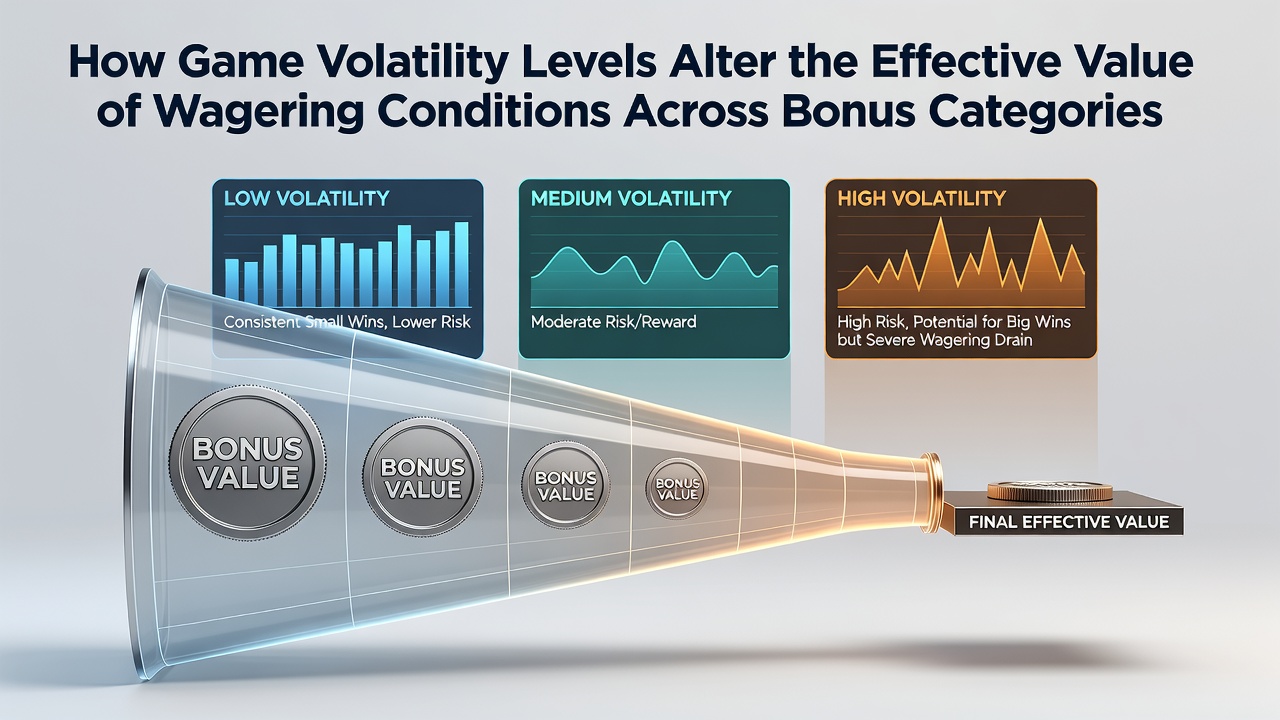
Game volatility refers to the frequency and size of payouts in digital casino titles, and operators adjust wagering conditions accordingly when players clear bonus offers. Low-volatility games deliver smaller wins more often while high-volatility options produce larger but less frequent returns, and these differences shift the practical cost of meeting playthrough targets in deposit bonuses, free-spin packages, and cashback promotions alike.
Defining Volatility Across Game Types
Slots fall into three main volatility bands according to data compiled by regulatory bodies and software providers, whereas table games such as blackjack and roulette typically sit at the lower end of the spectrum because their return-to-player percentages remain steadier over shorter sessions. Video poker and certain live-dealer variants occupy a middle ground, and observers note that bonus terms list contribution percentages that reflect these payout patterns directly.
Low-Volatility Games and Wagering Efficiency
Players clear requirements faster when they choose low-volatility titles because steady small wins keep bankrolls intact longer, allowing more spins or hands within the same time frame. Research from the Australian Gambling Research Centre indicates that low-volatility slots contribute 100 percent toward wagering targets in most European and North American platforms, yet the effective value of a bonus shrinks when operators apply shorter validity windows that favor quicker completion. Data collected through November 2026 shows average clearance times for low-volatility selections run 30 to 40 percent shorter than those recorded for high-volatility counterparts under identical bonus structures.
Medium-Volatility Options in Bonus Categories
Medium-volatility games balance payout size and frequency, and they appear in many welcome packages where operators set contribution rates between 50 and 75 percent. Those who study bonus mechanics find that free-spin bonuses attached to medium-volatility reels often require additional deposit steps before winnings convert to cash, while cashback offers treat these titles at full contribution once players reach a minimum loss threshold. Figures released by the New Jersey Division of Gaming Enforcement reveal that medium-volatility selections accounted for 42 percent of all bonus redemptions processed on licensed sites during the first three quarters of 2026.
High-Volatility Impact on Bonus Valuation
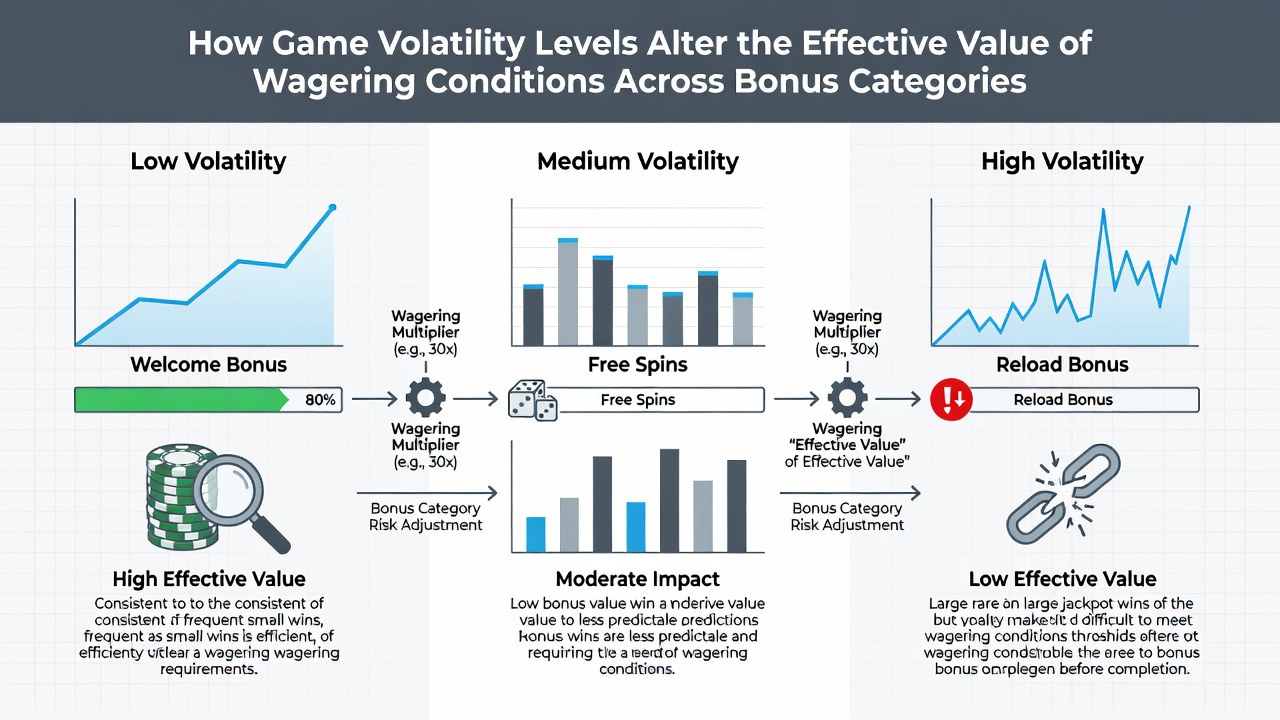
High-volatility titles produce infrequent but sizable wins, and this pattern raises the real cost of meeting wagering conditions because longer dry spells increase the chance that players exhaust bonus funds before completing requirements. Operators respond by capping maximum bets or limiting contribution rates to 20 or 30 percent for these games across most deposit-bonus categories. Studies compiled by the Ontario Lottery and Gaming Corporation demonstrate that high-volatility slots extend average clearance timelines by 65 percent compared with low-volatility alternatives, and the same pattern holds for progressive jackpot games that carry even steeper volatility profiles.
Cross-Category Adjustments in 2026
Bonus categories respond differently to volatility shifts. Welcome offers tied to first deposits frequently list separate weighting tables that penalize high-volatility play, while reload bonuses and loyalty rewards apply flatter contribution schedules that treat volatility bands more evenly. Cashback promotions, which activate after net losses, favor high-volatility selections because larger swings generate bigger loss figures that trigger faster rebates, yet the converted funds still carry fresh wagering conditions that reset the clock. Reports issued in November 2026 by the Malta Gaming Authority show operators revised 18 percent of their active bonus portfolios to reflect updated volatility weighting after internal audits identified discrepancies in clearance rates.
Practical Examples from Licensed Markets
Take one operator licensed in multiple jurisdictions that altered its free-spin bonus structure in early 2026: high-volatility games contributed only 10 percent toward the 40-times playthrough target, medium-volatility titles contributed 60 percent, and low-volatility games contributed the full amount. Players who mixed game types discovered their effective wagering value changed by as much as 35 percent depending on the volatility mix they selected. Similar adjustments appear in Canadian provincial platforms where regulators require transparent weighting tables that list each volatility band separately.
Conclusion
Volatility levels directly influence how quickly and efficiently players satisfy wagering conditions across every major bonus category, and regulatory data collected through late 2026 confirms that operators continue to refine contribution tables to align with observed payout patterns. Those who track these mechanics note that choosing the right volatility band for a given bonus type alters the practical value of the offer without changing the stated terms, and the pattern holds across markets that publish detailed gaming statistics on a monthly or quarterly basis.